By clicking “Accept All Cookies”, you agree to the storing of cookies on your device to enhance site navigation, analyze site usage, and assist in our marketing efforts. View our Privacy Policy for more information.
Grip Strength & Longevity: Why It Matters More Than You Think
Grip strength is a key indicator of longevity and total body strength. Learn how your lats impact grip, when to use chalk, and how to care for your hands for better performance.
By
April 7, 2026
.png)
Related

If you want to age strong, capable, and independent…
we need to talk about your grip.
Grip strength isn’t just about holding onto a kettlebell.
It’s one of the most underrated indicators of overall strength, resilience, and longevity.
At Bellbar, we don’t just train muscles—we train systems.
And your grip? That’s part of a much bigger picture.
Grip Strength Starts at Your Lats
Most people think grip is just about your hands.
It’s not.
Your grip is directly connected to your lats—those big muscles along your back that help stabilize your shoulders and connect your upper body to your core.
When you pick up a kettlebell or barbell:
- Your hands grab the weight
- Your lats “lock it in”
- Your core stabilizes the system
If your lats aren’t engaged, your grip will always feel weaker than it should.
That’s why we cue things like:
- “Pull your shoulders down”
- “Pack your lats”
- “Connect your upper body”
Because true grip strength isn’t isolated—it’s integrated.
Why Grip Strength Matters for Longevity
This isn’t just gym talk.
Grip strength has been strongly linked to:
- Overall strength and muscle mass
- Injury prevention
- Better posture and shoulder health
- Independence as you age
Simple things like:
- Carrying groceries
- Opening jars
- Catching yourself if you trip
All depend on your grip.
If you lose your grip strength, you lose a major piece of your autonomy.
That’s why we train it.
Let’s Talk About Chalk
Now that the weather is warming up…
you’ve probably noticed it:
👉 Slippery hands
👉 More reliance on chalk
And yes—chalk is great.
It helps absorb moisture and gives you better control over the weight.
But here’s the thing…
Chalk is meant to assist your grip—not replace it.
If you’re reaching for chalk every set, every rep, without thinking about your actual grip engagement…you’re missing the point.
Even more important:
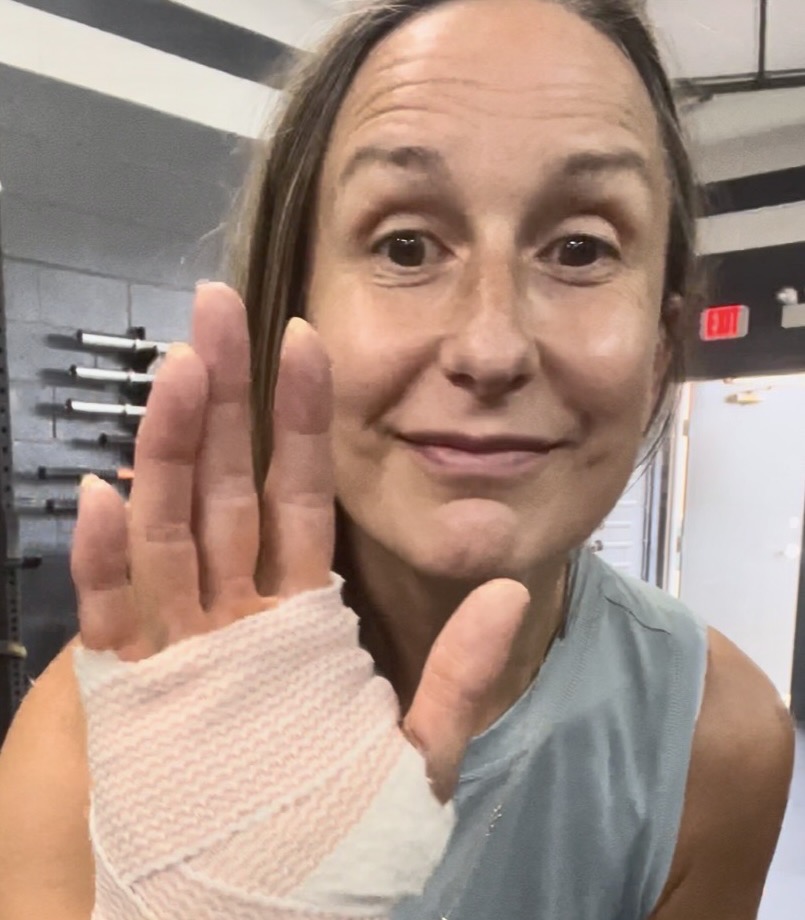
👉 Too much chalk + friction = torn callouses
And if you’ve ever ripped your hands, you know how quickly that can derail your training.
Take Care of Your Hands (Seriously)
Your hands are your connection to every lift.
So treat them like part of your training—not an afterthought.
Here’s what I recommend:
- Keep a pumice stone at your bathroom sink
- Lightly exfoliate your hands daily
- Use a small amount of lotion to keep skin healthy (not overly soft)
This helps:
- Prevent thick, raised callouses
- Reduce the risk of tears
- Keep your hands “kettlebell ready” year-round
It’s simple. It takes 30 seconds.
And it makes a huge difference.
Train Smarter. Get Stronger.
Grip strength isn’t about squeezing harder.
It’s about connection.
It’s about control.
It’s about building a body that works as one system.
So next time you pick up a kettlebell:
- Think about your lats
- Use chalk when needed—not automatically
- And take care of your hands like they matter…because they do
Because strength isn’t just what you can lift today—
it’s what you can keep doing for the long haul.